Hanan Paul Shaji, Ann Maria Shaju, Haritha TK, Anand Sunil, Jefin Chacko, Infant Henzia T. A Study to assess the knowledge and attitude on Usage of Menstrual cup among adolescent girls at selected Rural areas, Bangalore. 2026;5(3):22-26. doi:10.65829/rvcn2022.1016.
RV JOURNAL OF NURSING SCIENCES (RVJNS)
Volume 5 | Issue 3 | July-September 2026 | Pages: 22-26
Original Article
A Study to assess the knowledge and attitude on Usage of Menstrual cup among adolescent girls at selected Rural areas, Bangalore
Mr. Hanan Paul Shaji1, Ms. Ann Maria Shaju2, Ms. Haritha TK3, Mr. Anand Sunil4, Mr. Jefin Chacko5, Mrs. Infant Henzia T6
ABSTRACT
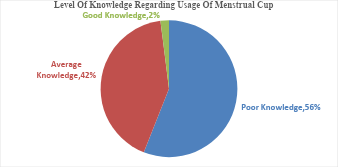
Background: Menstruation is a normal physiological process, yet it remains shrouded in silence and stigma across many communities. Menstrual cups are a modern, reusable, and eco-friendly alternative to traditional menstrual products. Menstrual cup awareness among adolescents is increasing but still remains low, with many having misconceptions about difficulty and safety of using it. Objectives :To assess the level of awareness regarding usage of menstrual cup among adolescent girls, to evaluate the acceptability of usage of menstrual cup among adolescent girls ,to find out the association between the level of awareness and acceptability with selected demographic variable among adolescent girls. Methodology: A descriptive research design was adopted, and 50 adolescent girls were selected using a convenient sampling technique. A self-structured questionnaire was used to assess knowledge and attitude regarding menstrual cup usage. The significance of association was tested using the Chi-square test .Results: The study reveals that 56% of adolescent girls had poor knowledge about menstrual cup usage, 42% had average knowledge, and only 2% had good knowledge. Despite this, a Positive attitude toward menstrual cup usage was observed among 100% of participants. A significant association was observed between knowledge, attitude, and all selected demographic variables. Conclusion; the awareness of menstrual cups among rural adolescent girls is low; their positive attitude indicates readiness to adopt this sustainable menstrual hygiene method. Targeted educational interventions are recommended to improve knowledge, dispel misconceptions, and encourage safe and eco-friendly menstrual practices.
References
- World Health Organization. Adolescent health. Geneva: World Health Organization; 2020.
- Central Pollution Control Board. Guidelines for management of sanitary waste. New Delhi: Central Pollution Control Board; 2018
- Menstrual Health Alliance India. Menstrual waste management in India. New Delhi: Menstrual Health Alliance India; 2019.
- UNICEF. Guidance on menstrual health and hygiene. New York: UNICEF; 2019.
- WaterAid. Menstrual hygiene matters: a resource for improving menstrual hygiene around the world. London: WaterAid; 2012.
- Hennegan J, Shannon AK, Rubli J, Schwab KJ, MelendezTorres GJ. Women’s and girls’ experiences of menstruation in low- and middle-income countries: a systematic review and qualitative metasynthesis. PLoS Med. 2019;16(5):e100280