
Sreekanth AN, Taneja R. Effectiveness of video-assisted teaching on telemedicine competency
among nursing officers for hypertension management in tertiary care hospitals at Bangalore
Karnataka. RV Journal of Nursing Sciences. 2026;5(2):25–32. doi:10.65829/rvcn2022.1019.
RV JOURNAL OF NURSING SCIENCES (RVJNS)
Volume 5 | Issue 2 | April - June 2026 | Pages: 27-34
Original Article
Effectiveness of Video-Assisted Teaching on Telemedicine Competency Among Nursing Officers for Hypertension Management in Tertiary Care Hospitals at Bangalore Karnataka
1 MR. Sreekanth A.N, 2 Dr. Rama Taneja



Copyright (c)

This work is licensed under a Creative Commons Attribution 4.0 International License
ABSTRACT
- Background: Telemedicine has moved from a pandemic-era contingency to a routine service pathway for chronic disease follow-up. In India, telemedicine practice guidelines, the growth of eSanjeevani, and Bengaluru-based telenursing guidance from NIMHANS have created a strong policy environment for nurse-led virtual care. Yet many tertiary hospitals still yet problematic in learning, and nursing officers may not receive structured preparation in remote communication, home blood pressure review, documentation, escalation, and digital professionalism.
- Objective: To evaluate the effectiveness of a video-assisted teaching program on telemedicine competency among nursing officers involved in hypertension management in Victoria hospital at (tertiary care hospitals) at Bengaluru, Karnataka.
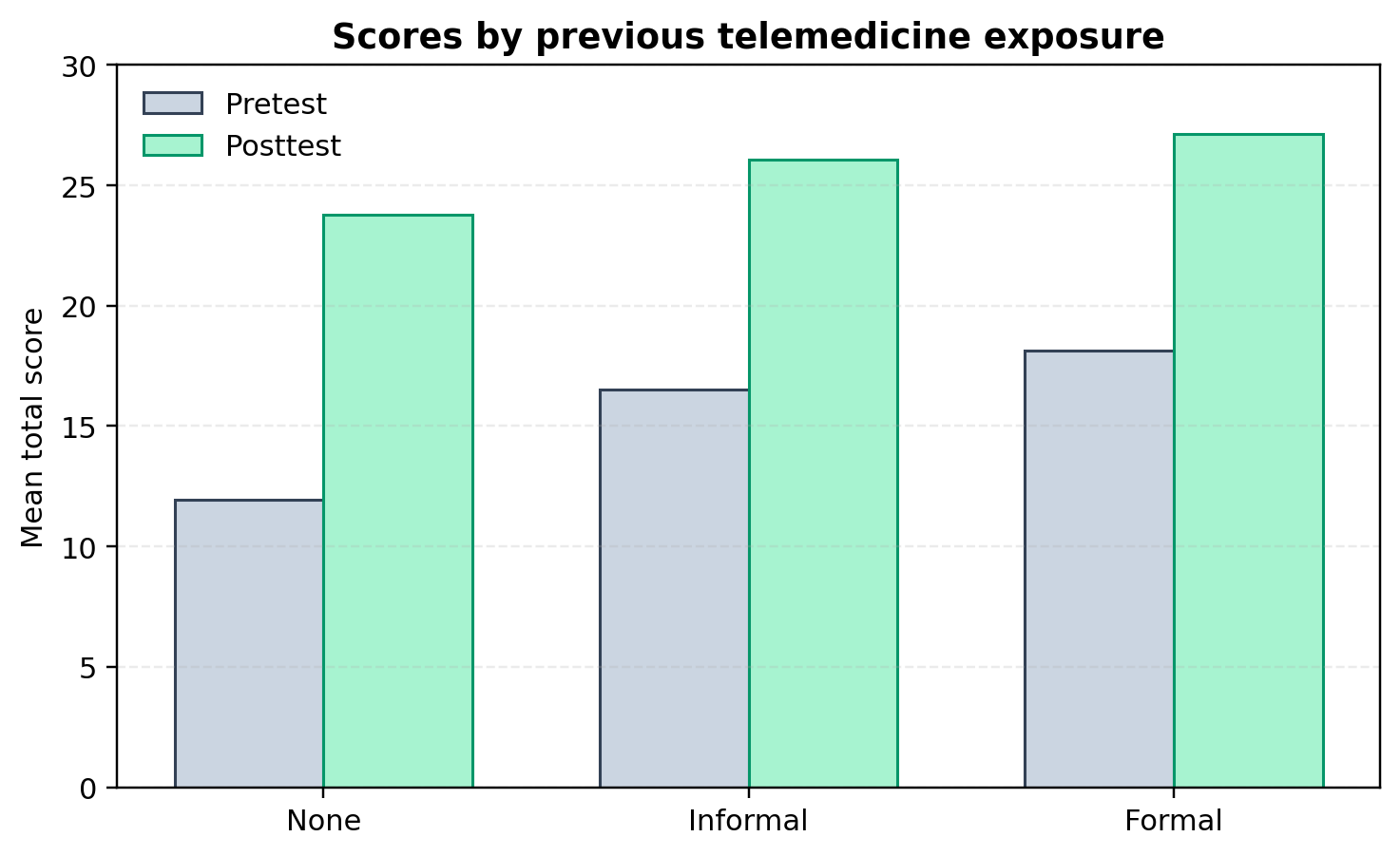
- Methods: A modeled quasi-experimental one-group pretest-posttest study was developed for manuscript planning. Sixty nursing officers with at least one year of clinical experience completed a 30-item Telemedicine Competency Questionnaire covering technical setup, clinical management, and communication/ethical documentation domains. The intervention was a 20-minute videoassisted teaching module focused on video consultation workflow, home blood pressure interpretation, medication and lifestyle counseling, privacy, consent, digital recordkeeping, and referral triggers. Descriptive statistics, paired t tests, confidence intervals, and subgroup analysis were used.
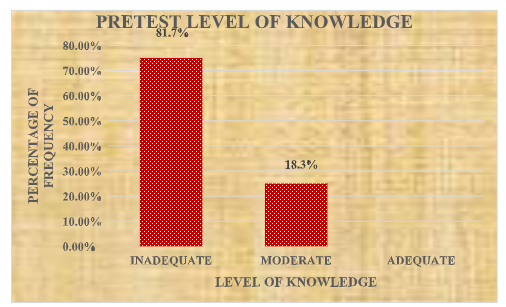
- Results: The mean total competency score increased from 13.73 (SD 4.09) at pretest to 24.72 (SD 3.11) at posttest, with a mean gain of 10.98 points (95% CI 10.43-11.53; t59=39.99; P<.001). Significant gains were observed in technical setup, clinical management, and communication/ethical documentation. Post training, 54/60 (90.0%) nursing officers were in the high or very high competency bands compared with 1/60 (1.7%) at baseline. Conclusions: The modeled results suggest that a short, well-designed video-assisted teaching package can substantially improve nursing officers’ telemedicine competency for hypertension follow-up. The article supports the integration of structured digital-care education into continuing nursing education and hospital induction programs in Victoria hospital, Bengaluru. A multicenter pragmatic trial with objective skill assessment is recommended.
References
- World Health Organization. First WHO report details devastating impact of hypertension and ways to stop it. Geneva: WHO; 2023.
- Mensah GA, Fuster V, Murray CJL, Roth GA, et al. Global burden of cardiovascular diseases and risks, 1990-2022. J Am Coll Cardiol. 2023;82(25):2350-2473.
- Leslie HH, Babu GR, Dolcy Saldanha N, et al. Population Preferences for Primary Care Models for Hypertension in Karnataka, India. JAMA Netw Open. 2023;6(3):e232937. doi:10.1001/jamanetworkopen.2023.2937.
- Ramani VK, Suresh KP. Prevalence of hypertension and diabetes morbidity among adults in a few urban slums of Bangalore city, determinants of its risk factors and opportunities for control – A cross-sectional study. J Family Med Prim Care. doi:10.4103/jfmpc.jfmpc_234_20. 2020;9(7):3264-3271.
- Ministry of Health and Family Welfare, Government of India; NITI Aayog. Telemedicine Practice Guidelines. New Delhi: MoHFW; 2020. 6. 7. 8. 9.
- Dinakaran D, Manjunatha N, Kumar CN, Math SB. Telemedicine practice guidelines of India, 2020: Implications and challenges. Indian J Psychiatry. 2021;63(1):97-101.
- Poreddi V, Kathyayani BV, Hatti NM, Reddemma K, Manjunatha N, Kumar CN, Math SB. NIMHANS-Telenursing Practice Guidelines 2020. Bengaluru: National Institute of Mental Health and Neurosciences; 2020.
- Holla B, Viswanath B, Neelaveni S, Harish T, Kumar CN, Math SB. Karnataka state telemedicine project: utilization pattern, current, and future challenges. Indian J Psychol Med. 2013;35(3):278-283. 7176.119492. doi:10.4103/0253
- Parthasarathi A, George T, Kalimuth MB, et al. Exploring the potential of telemedicine for improved primary healthcare in India: a comprehensive review. Lancet Reg Health Southeast Asia. 2024;27:100431. doi:10.1016/j.lansea.2024.100431. 10.
- Sood S, Lal K, Naskar A, et al. Adoption and utilization of India’s eSanjeevani national telemedicine service. J Public Health (Oxf). 2025. PMCID: PMC12558045.
- Kulju E, Jarva E, Oikarinen A, Hammarén M, Kanste O, Mikkonen K. Educational interventions and their effects on healthcare professionals’ digital competence development: A systematic review. Int J Med Inform. 2024;185:105396. doi:10.1016/j.ijmedinf.2024.10539
More Articles
Dr. S R Gajendra Singh
RV JOURNAL OF NURSING SCIENCES (RVJNS)
Volume 5 | Issue 2 | April - June 2026 | Pages: 1-4
Dr. Sundaram M1, Dr. Bhuvaneswari G2, Dr. Chandrika Anand3
RV JOURNAL OF NURSING SCIENCES (RVJNS)
Volume 5 | Issue 2 | April - June 2026 | Pages: 5-9
24 March 2025
1 Shini Raju Gouli, 2 Jannatbi L Iti, 3 Raju G.M, 4 Shilpa K, 5* Stephen John
RV JOURNAL OF NURSING SCIENCES (RVJNS)
Volume 5 | Issue 2 | April - June 2026 | Pages: 10-14
14 March 2026
Ms Jeeva Vinoy1, Ms Lalitha Naikar2, Ms Lakshmi Dharsang3, Mr Akash Lamani4
RV JOURNAL OF NURSING SCIENCES (RVJNS)
Volume 5 | Issue 2 | April - June 2026 | Pages: 14-20
30 March 2026
Mrs. Soniya Palakkamannil Varghese
RV JOURNAL OF NURSING SCIENCES (RVJNS)
Volume 5 | Issue 2 | April - June 2026 | Pages: 21-26
24 March 2025