Nyokir K, Mamata N, Gajendra Singh SR. A descriptive study to assess the level of burnout and resilience at work among staff nurses at a selected hospital, Bangalore, Karnataka. RV Journal of Nursing Sciences. 2025;4(4):6–10.
Copyright (c)
This work is licensed under a Creative Commons Attribution 4.0 International License
ABSTRACT
The high level of stress experienced by staff nurses leads to moral distress, burnout and a host of detrimental effects in the hospitals. The aim of this study is to assess the burnout and resilience at work among staff nurses at selected hospitals, Bengaluru.
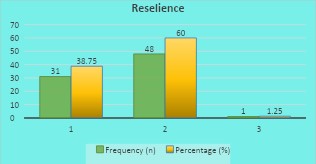
Methods: The study is based on descriptive research design in which 80 staff nurses were selected based on the purposive sampling technique. A structured tool Copenhagen Burnout Inventory (CBI) scale and Brief Resilience scale (BRS) was used to assess the level of burnout and resilience at work among staff nurses at selected hospitals, Bengaluru. Results: The study’s analysis showed that 5% of staff nurses had low levels of burnout at work, 21.25% have normal levels, 13.75% have high levels, and 60% have above-average levels, the majority of staff nurses (63.75%) exhibit normal resilience, whereas 35% have low resilience and 1.25 percent show high resilience at work among staff nurses. Burnout score were significantly associated with gender (χ² = 15.555, p = 0.0001), and annual income (χ² = 6.8934, p = 0.0087), but not other demographics, whereas resilience scores were significantly associated with age (χ² = 5.0793, p = 0.0242), and annual income (χ² = 7.8202, p = 0.0052).Conclusion: Many staff nurses have normal resilience and burnout levels that are above average. Implementing resilience-building programs would help them avoid burnout and maximize their ability to deliver high-quality healthcare.
Castillo‐González A, Velando‐Soriano A, De La Fuente‐Solana EI, Martos‐Cabrera BM, Membrive‐Jiménez MJ, Lucía RB, Cañadas‐De La Fuente GA. Relation and effect of resilience on burnout in nurses: A literature review and meta‐analysis. International Nursing Review. 2024 Mar;71(1):160-7.
Gómez-Urquiza, J. L., De la Fuente-Solana, E. I., Albendín-García, L., Vargas-Pecino, C., Ortega-Campos, E. M., & Cañadas-De la Fuente, G. A. (2017). The impact of emotional intelligence on burnout in nursing: A systematic review. International Journal of Nursing Studies, 69, 100–113.
Sisto A, Vicinanza F, Campanozzi LL, Ricci G, Tartaglini D, Tambone V. Towards a transversal definition of psychological resilience: a literature review. Medicina. 2019 Nov 16;55(11):745.
Jose S, Dhandapani M, Cyriac MC. Burnout and resilience among frontline nurses during COVID-19 pandemic: a cross-sectional study in the emergency department of a tertiary care center, North India. Indian journal of critical care medicine: peer-reviewed, official publication of Indian Society of Critical Care Medicine. 2020 Nov;24(11):1081.
Rushton CH, Batcheller J, Schroeder K, Donohue P. Burnout and resilience among nurses practicing in high-intensity settings. American journal of critical care. 2015 Sep 1;24(5):412-20.
Foster K, Roche M, Giandinoto JA, Furness T. Workplace stressors, psychological well‐being, resilience, and caring behaviours of mental health nurses: A descriptive correlational study. International journal of mental health nursing. 2020 Feb;29(1):56-68.